Donald Trump is now using the federal government to go after people who hurt his feelings.
On April 9th, he ordered formal investigations into two former officials, Chris Krebs and Miles Taylor, and as far as I can tell neither of them broke any actual laws. No, they did something much worse that mere criminal activity, at least in the eyes of this particularly vengeful and narcissistic president… they broke ranks and contradicted him, which is the one truly unforgivable offense in Trump’s world.
If the names Krebs and Taylor don’t ring a bell, here’s a primer. Chris Krebs led the Cybersecurity and Infrastructure Security Agency back in 2020 and after the election he publicly affirmed that the vote had been secure. Multiple official reviews confirmed his findings. Trump, of course, famously didn’t like the results so he fired Krebs via tweet for doing his job and now, years later, he’s dragging him into a federal probe over his disloyalty. There’s a good chance that some of Krebs’s former colleagues will end up losing their security clearances in the process, just more collateral damage in the President’t ongoing grievance project of making an example out of anyone who steps out of line.
Miles Taylor was a Homeland Security official, and you might remember him as the guy who wrote that anonymous “I Am Part of the Resistance” op-ed in the New York Times during Trump’s first term, where he talked about trying to contain the chaos from the inside the administration. He followed it up with an anonymous book called A Warning and then eventually went public with his name attached. Trump is calling him a traitor now, and he’s not using that word in the casual, hyperbolic way of saying “he’s a disloyal guy.” He actually used the word “treason,” specifically, which for the record still carries the death penalty under U.S. law.
In the memoranda ordering these investigations, Trump’s team labeled Krebs a “significant bad-faith actor” who “weaponized” government authority, and said Taylor “stoked dissension.” Reading through it, I kept waiting to find the part where either of them actually did any of those things, and never did. What I found instead were two men being punished for challenging a narrative, dressed up in language formal enough to look almost like oversight.
Taylor’s response made it clear that he saw this coming and that it had nothing to do with legitimate wrongdoing on his part. “I said this would happen. Dissent isn’t unlawful. It certainly isn’t treasonous. America is headed down a dark path. Never has a man so inelegantly proved another man’s point.”
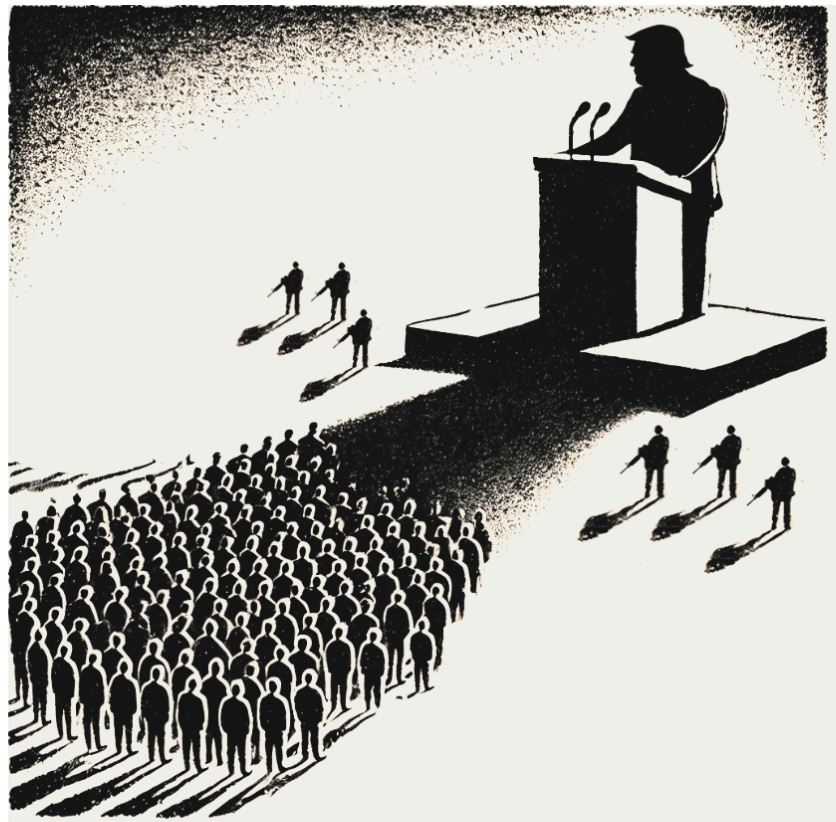
These investigations are retribution, petty payback laundered through executive orders and handed off to federal agencies that are apparently now expected to moonlight as the president’s personal enforcers. Trump isn’t even bothering to hide that fact, which isn’t exactly surprising since the loudness is the point, meant to intimidate anyone still clinging to that old-fashioned idea that facts actually matter.
And it’s working, near as I can tell. Law firms that once challenged the Trump administration in court are now being leaned on to “volunteer” their legal services just to stay in the administration’s good graces. Some of them are offering up hundreds of millions of dollars in free labor that has nothing to do with their civic duty. They just want to stay off the list. That’s a hell of a way to buy silence without anyone actually having to say a word out loud.
The blueprint Trump is using here isn’t complicated. Punish dissent without needing a conviction, bury people in legal threats, name them publicly, isolate them, and let the harassment machine, both official and online, take it from there. By the time the charges get tossed by a court later, everyone watching has already gotten the message.
This won’t stop with Krebs or Taylor, obviously, because it was never really about those two men specifically. Every journalist, every judge, every librarian and teacher and federal worker who might someday be tempted to speak up now knows exactly what it could cost them to do so, and can do the simple math that it might be safer to just stay quiet.
Of course, we’ve seen versions of this before. The McCarthy era smeared critics with accusations of disloyalty. COINTELPRO targeted activists and political groups under the banner of national security. But back then, at least there was some effort to preserve the illusion. There’s none of that pretense now. We’ve got a president demanding loyalty in public, calling his critics traitors, and turning federal agencies into blunt instruments of his own ego maintenance, with zero-fucking-interest in covering his tracks.
What makes it worse is just how performative the whole thing is. The punishments play out in public, the threats are staged for an audience, and the autocratic behavior underneath it all is cheered on by a base that’s been conditioned long enough now that revenge and pettiness have become their own kind of currency. The longer we let this pass as just another chaotic headline in an already chaotic cycle, the more normal it starts to feel.
You don’t have to like Taylor or Krebs. You don’t have to agree with a single word either of them has ever said. But if you’re fine with a president weaponizing the Department of Justice against people who contradict him, or perhaps just fail to clap loudly enough on cue, it might be worth asking yourself what you think democracy is actually supposed to mean.
Because once dissent gets recast as disloyalty to the regime, the rest of the rules start looking optional too. And when the rules are optional for the people in power, they eventually become irrelevant for everyone else.
Call it what it is. Abuse, loud and deliberate, dressed up in enough legal language to almost pass for procedure. And it’s a pretty clear warning to anyone who still believes criticizing the president isn’t grounds for persecution.
Nick Allison is a former Army infantryman, a college dropout, and a writer based in Austin, Texas. A center-left political independent with a distrust of all ideologies (including his own), Nick spends too much time reading about history, democracy, and systems in collapse—and not nearly enough time being optimistic about any of it. He writes about politics, culture, and philosophy mostly as a way to make sense of the mess. Also, he secretly enjoys writing his own bio in the third person—probably because it makes him feel a little more important than he actually is.
Discover more from the chaos section
Subscribe to get the latest posts sent to your email.


